
It was early morning when I left Skardu. The valley still slept under a thin veil of mist, and the first light of dawn painted the distant peaks gold. Frankie stood waiting, loaded and eager, her metal body glinting in the chill of 6 a.m. I turned the key, and the familiar hum of the engine broke the silence. Ahead lay one of the most mysterious places in Gilgit-Baltistan—Deosai National Park Pakistan, the “Land of Giants,” where sky and earth blend into a single breathless horizon.
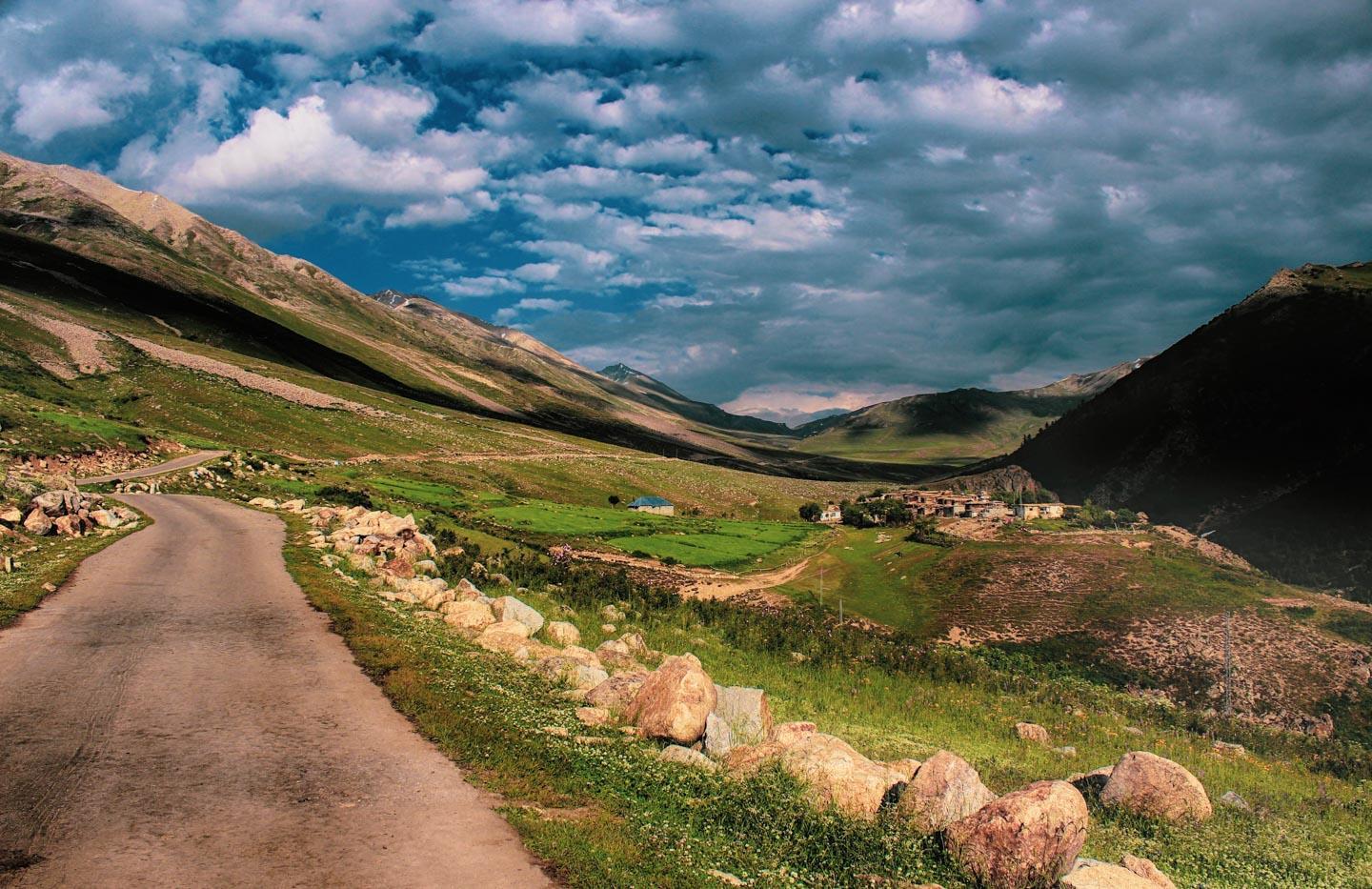
As I rode through the winding mountain road, the air grew thinner and cooler. The sound of Frankie’s engine echoed off the granite walls of the Karakoram Range. Each curve revealed a new wonder: waterfalls tumbling from cliffs, patches of wild thyme scenting the air, and nomad tents clinging to the slopes like tiny dots of color.
The road narrowed to gravel. My speed slowed, but my heartbeat quickened. Somewhere beyond these mountains stretched the Deosai Plateau, a place spoken of with awe by travelers and whispered about by locals—a wilderness so high, so remote, that it feels untouched by time itself.
Entering the Gateway to Deosai National Park, Pakistan
By mid-morning, I reached the checkpoint marking the boundary of Deosai National Park, Pakistan. A small wooden hut stood there, a flag fluttering in the crisp wind. The ranger smiled when he saw Frankie. “Long road ahead,” he said. I nodded. “That’s exactly why I’m here.”
Crossing that gate felt like stepping into another world. The paved road ended abruptly, replaced by rocky trails that cut through open tundra. No trees, no villages, just endless land rising toward the clouds. The wind was constant, whispering secrets from the high Himalayas.
I switched off the engine and stood in silence. There was no sound but the soft rush of wind and the cry of a distant eagle. It was as if the earth itself was breathing slowly beneath my boots. I whispered my familiar greeting—“Good morning, Internet”—but the only audience was the wind and the mountains.
The Deosai Plateau — Second Highest on Earth
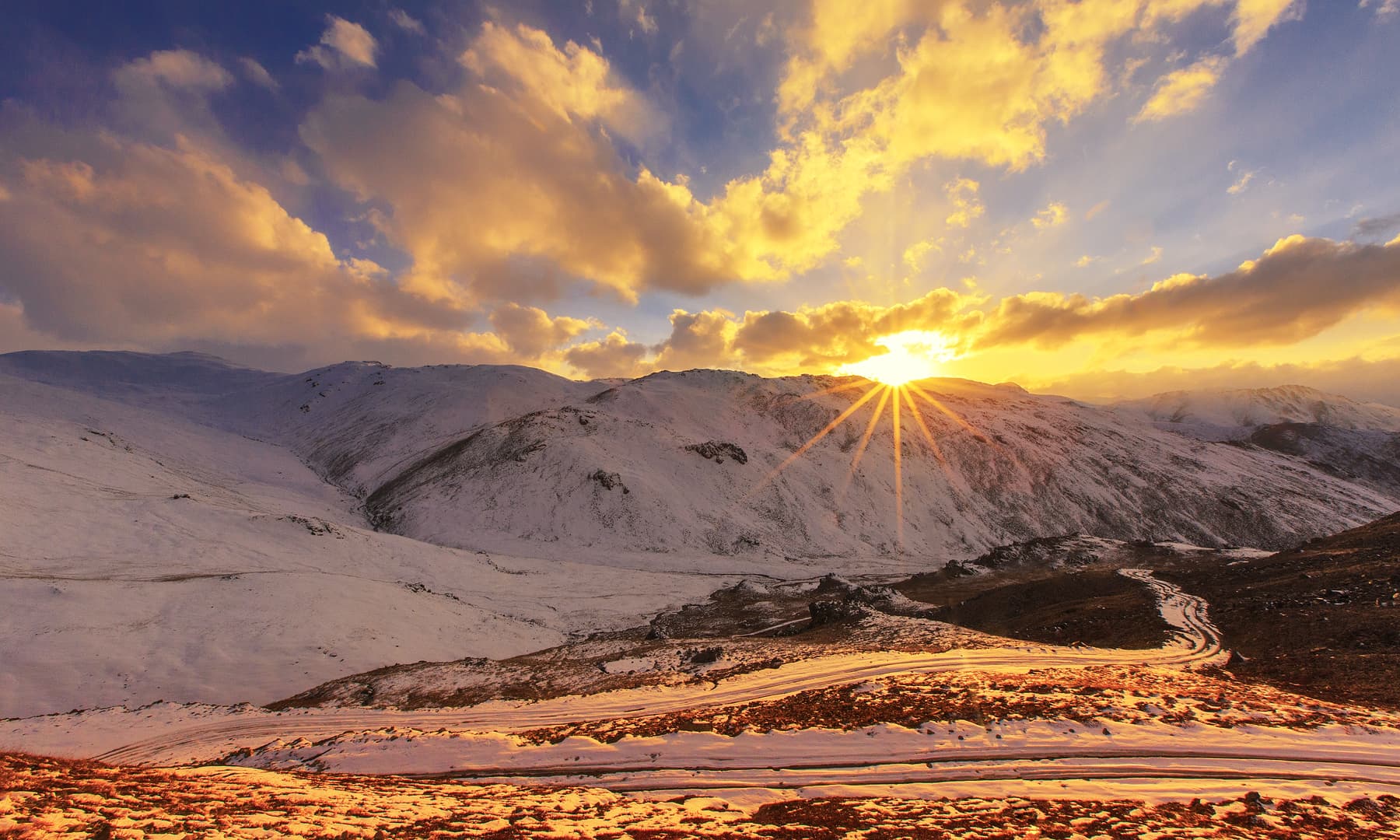
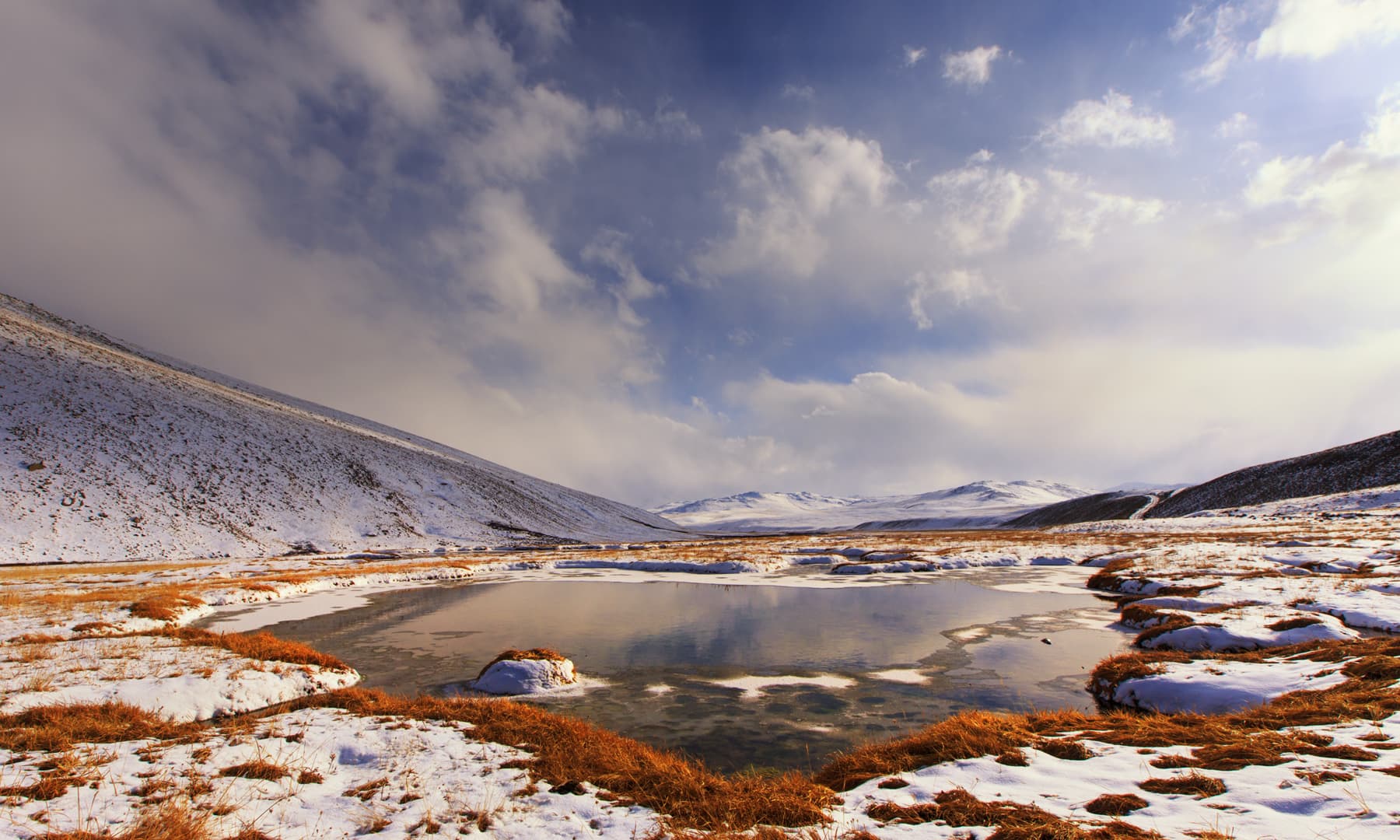
Deosai is not just a park; it is a living world suspended between heaven and earth. At more than 4,000 meters above sea level, it is the second-highest plateau in the world after Tibet. For eight months each year, this vast expanse lies buried under snow. Yet in summer, the white fades to green, and the frozen silence transforms into a wild symphony of life.
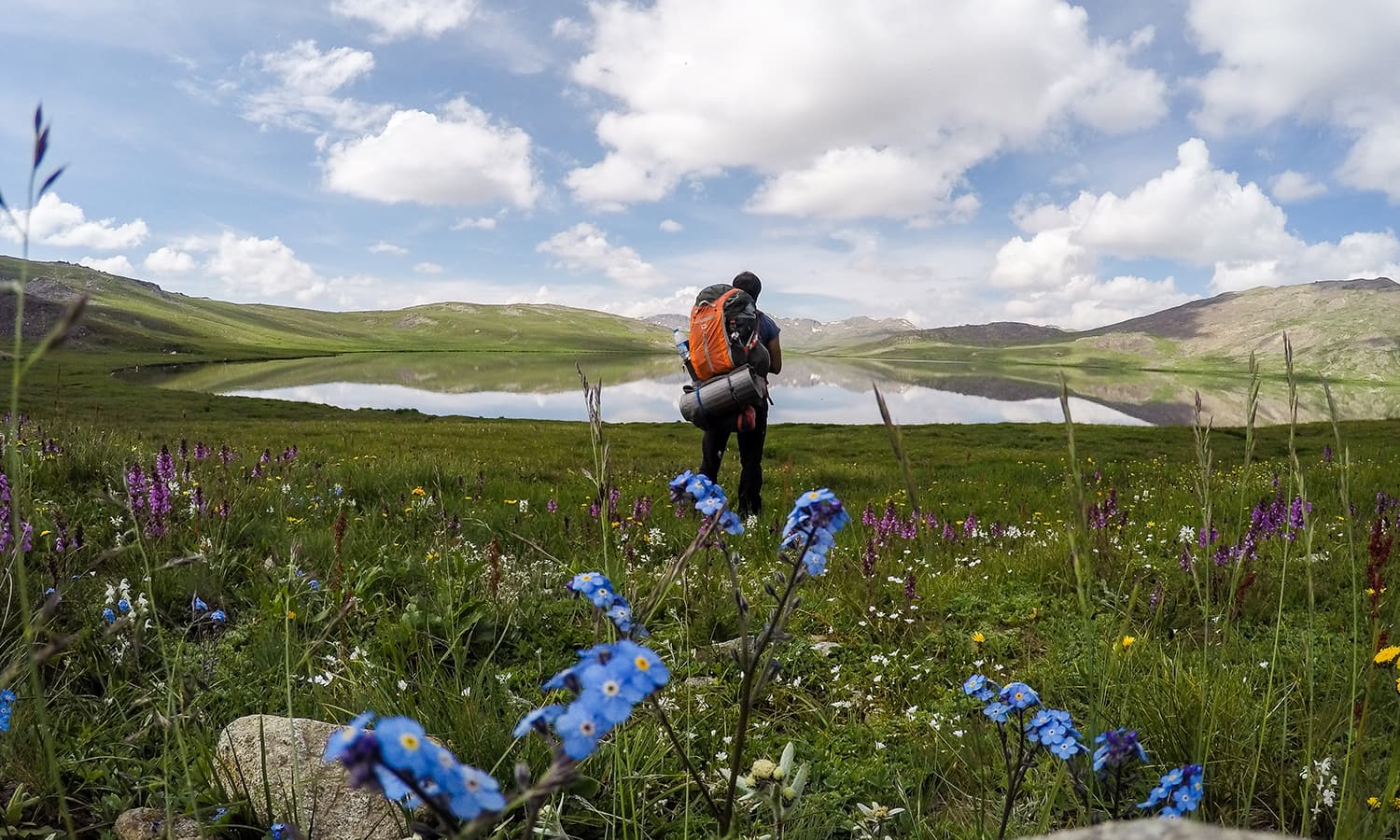
As I rode deeper, the earth came alive. Meadows bloomed with alpine flowers—blue forget-me-nots, yellow buttercups, purple irises. Streams of melted snow carved silver ribbons through the grass. I stopped to refill my bottle, the water so cold it numbed my fingers. Nearby, plump marmots darted between rocks, chirping alarms to warn others of my presence.
It’s strange to feel both completely alone and completely connected at the same time. Out here, solitude isn’t emptiness; it’s peace. Every breath feels earned, every view feels sacred.
Sheosar Lake Deosai — Mirror of the Sky
After several hours, I reached Sheosar Lake Deosai, one of the highest alpine lakes in the world. Its name means “Blind Lake,” but it sees more than any of us ever could. The surface was glass-still, reflecting clouds and mountains so perfectly that the sky seemed doubled.
I parked Frankie on the bank and sat down to take it all in. The air was thin and sharp; the only sound was the ripple of wind across the water. Far beyond, the ghostly outline of Nanga Parbat hovered in the distance—its 8,126 meters of rock and snow glowing faintly under the afternoon sun.
For a long time, I just sat there watching light shift across the peaks. It felt as if the entire world had paused to breathe. Places like this remind you that beauty doesn’t need to shout; it only needs to exist.
Wildlife of Pakistan — Meeting the Hidden Residents of Deosai
Deosai National Park is home to a remarkable variety of life despite its harsh conditions. Over 340 species of alpine plants grow here, along with more than 200 species of birds—snow partridges, Himalayan monals, golden eagles, and falcons that ride the high thermals. But the true monarch of this land is the Himalayan brown bear.
I didn’t expect to see one—I knew they were shy—but just knowing they were near changed everything. Every rustle in the grass felt electric, every paw-shaped print on the trail carried a silent story. These bears once roamed across northern Pakistan, India, and Kashmir in great numbers. Today they survive only in a few protected areas, and Deosai National Park Pakistan is their last stronghold.
The rangers told me there are around forty to fifty bears now. When the park was established in 1993, there were only seventeen left. Years of hunting and habitat loss had almost erased them, but the creation of the park, and later the tireless work of the Himalayan Wildlife Foundation, helped them return.
The Himalayan Brown Bear in Pakistan — A Story of Survival
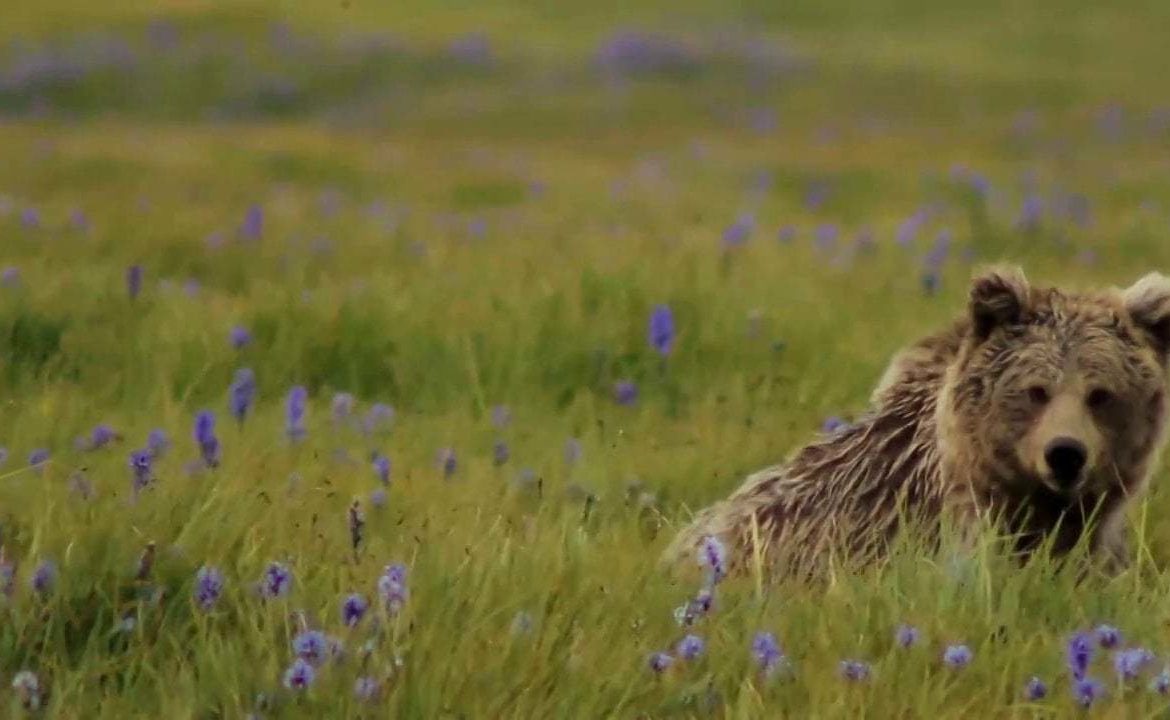
Later that day, I met a park ranger named Ali at a small research post. His uniform was faded, his face weathered by mountain wind. Over cups of salty butter tea, he told me about the bears. “They are old souls,” he said. “Their kind has walked these mountains for thousands of years. But they breed slowly, maybe one cub every few years. Every death sets us back a generation.”
He showed me a tattered notebook filled with entries—dates, locations, sightings. “We protect them, but the land is changing. More tourists, more herders, more vehicles.” He paused. “We must share Deosai, not take it.”
His words stayed with me. I thought about how fragile balance is—how easily human ambition can unmake what nature has built over millennia.
As the evening fell, Ali pointed toward a slope bathed in gold. “There,” he said. I followed his gaze. Far in the distance, moving slowly across the meadow, was a dark shape—massive shoulders, heavy stride. My heart jumped. A Himalayan brown bear. It walked with the calm of something that knows it belongs. I watched it until it disappeared into the hills.
Nomads of Deosai — The Gujjar Herders and Their Summer Migration
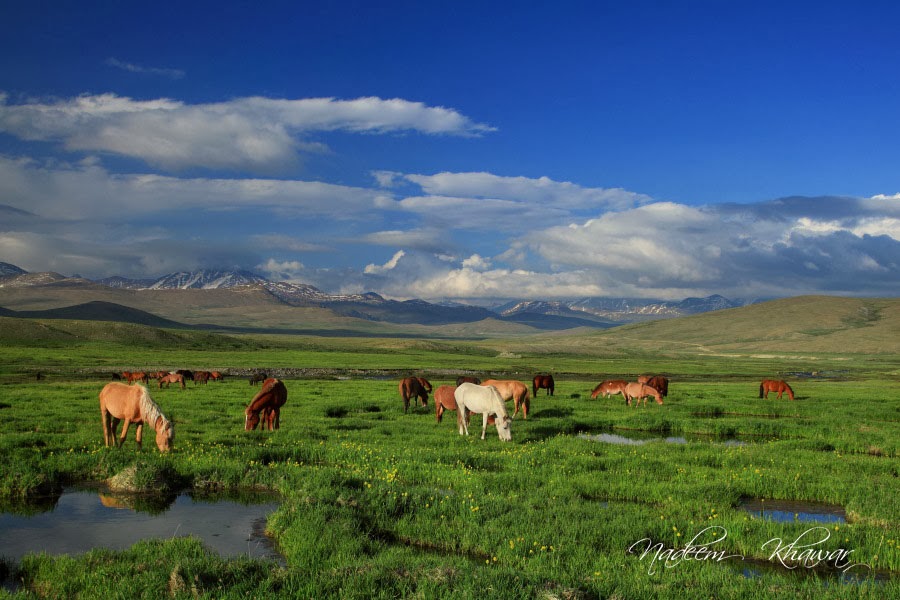
The next morning, I rode toward the southern edges of the plateau and met a caravan of Gujjar herders. They were leading hundreds of sheep and goats, bells clinking, children laughing as they guided the animals across the grasslands. These families have traveled this route for generations, migrating from the plains of Punjab to the high pastures of Deosai every summer.
They invited me to share their fire. I sat with them, sipping tea boiled in blackened kettles, listening to their stories. Life here is simple but hard—thin air, unpredictable weather, isolation. They spoke of their respect for the land, for the bears that wander nearby, for the rivers that feed both human and beast.
Yet, I could sense the quiet tension. The same meadows that feed their livestock are also the feeding grounds for the bears. Each summer, the line between coexistence and conflict grows thinner.
One old man, his beard white as snow, said softly, “We were here before the park, but now the park protects us too. If the land dies, we die with it.”
Conservation Efforts in Deosai National Park, Pakistan
The Himalayan Wildlife Foundation and the Gilgit-Baltistan Wildlife Department have worked tirelessly to protect both the bears and the people. They educate locals, train rangers, and monitor wildlife through radio collars and field studies. But challenges remain—limited funding, unregulated tourism, overgrazing, and the growing demand for natural resources.
As I rode across the plateau, I saw evidence of both progress and strain. New bridges made travel easier, but they also brought more vehicles and waste. Plastic wrappers fluttered in the wind like unwanted flags. The beauty of Deosai National Park is eternal, but it is not invincible.
At one rest stop, a young ranger cleaning litter told me, “We can protect the bears, but who will protect us from our own carelessness?” His words cut deep. Conservation is not just about laws; it’s about awareness. Every traveler leaves a mark, visible or not.
Camping Under the Milky Way — A Night in Deosai National Park
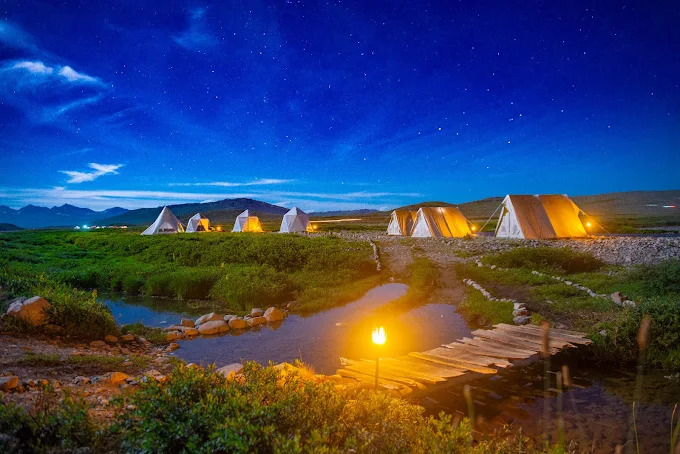
That night I pitched my tent near a ridge overlooking the plains. The wind had calmed, and the temperature dropped quickly. When darkness fell, the sky exploded with stars. The Milky Way stretched from horizon to horizon, a river of light across the heavens. I turned off my headlamp and stood outside, breath visible in the cold air, surrounded by a silence so complete it felt holy.
I brewed tea, wrapped myself in a blanket, and watched satellites drift overhead. In the distance, I thought I heard a low growl carried on the wind—perhaps a bear, perhaps the mountain itself breathing.
Moments like this remind me why I travel. It isn’t about reaching places; it’s about feeling them. Standing there under the vast sky of Deosai National Park Pakistan, I felt both insignificant and infinite, as if the world had folded itself around me.
Morning at 4,000 Meters — The Golden Awakening of Deosai
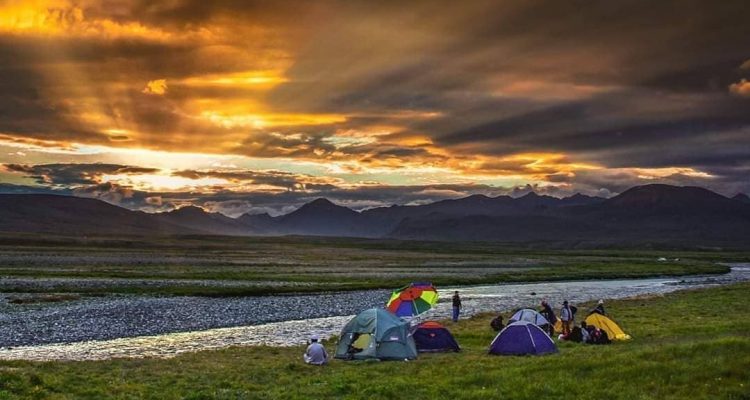
At dawn, frost sparkled on the grass. The first sunlight touched the peaks, and a golden wave rolled across the plains. I brewed coffee and watched marmots wake, stretching before dashing into their burrows. Somewhere unseen, eagles circled, scanning for movement.
This is the rhythm of Deosai National Park—a daily resurrection. Life sleeps under snow for months, only to burst into motion for a short summer. It’s a reminder that resilience is nature’s greatest art.
Before packing up, I walked to a nearby stream. The water reflected the sky so clearly that it felt like another world beneath my feet. I whispered a small prayer of gratitude—not out of religion, but out of awe. “Thank you for letting me pass through,” I said to the wind.
Sheosar to Sadpara — The Villages Beneath the Plateau
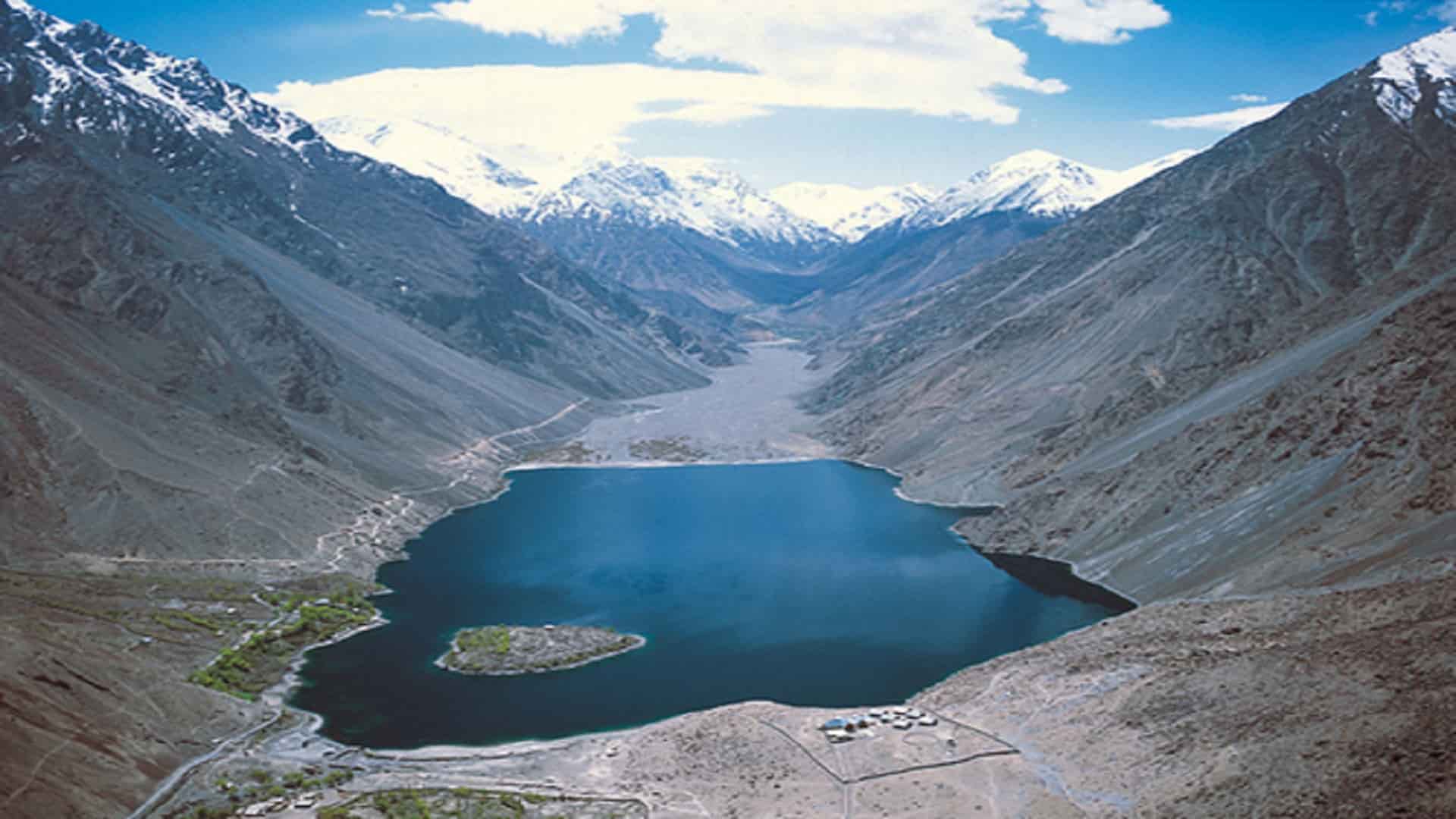
Descending from the high plains, I passed through small mountain villages—Sadpara, Shilla, and Sheosar—where life clings to simplicity. Stone houses with smoke rising from chimneys, women collecting dung cakes for fuel, children herding goats along the road. These people live on the edge of endurance, yet their smiles carry warmth that the cold cannot steal.
I stopped in Sadpara for a meal—flatbread, lentils, and salty chai. The innkeeper asked where I’d come from. When I said “Deosai,” he nodded with quiet pride. “Our giants live there,” he said. “You are lucky to have seen their land.”
He was right. Deosai belongs not just to the bears or the mountains—it belongs to everyone who respects its silence.
The Spirit of Deosai — Lessons from the Land of Giants
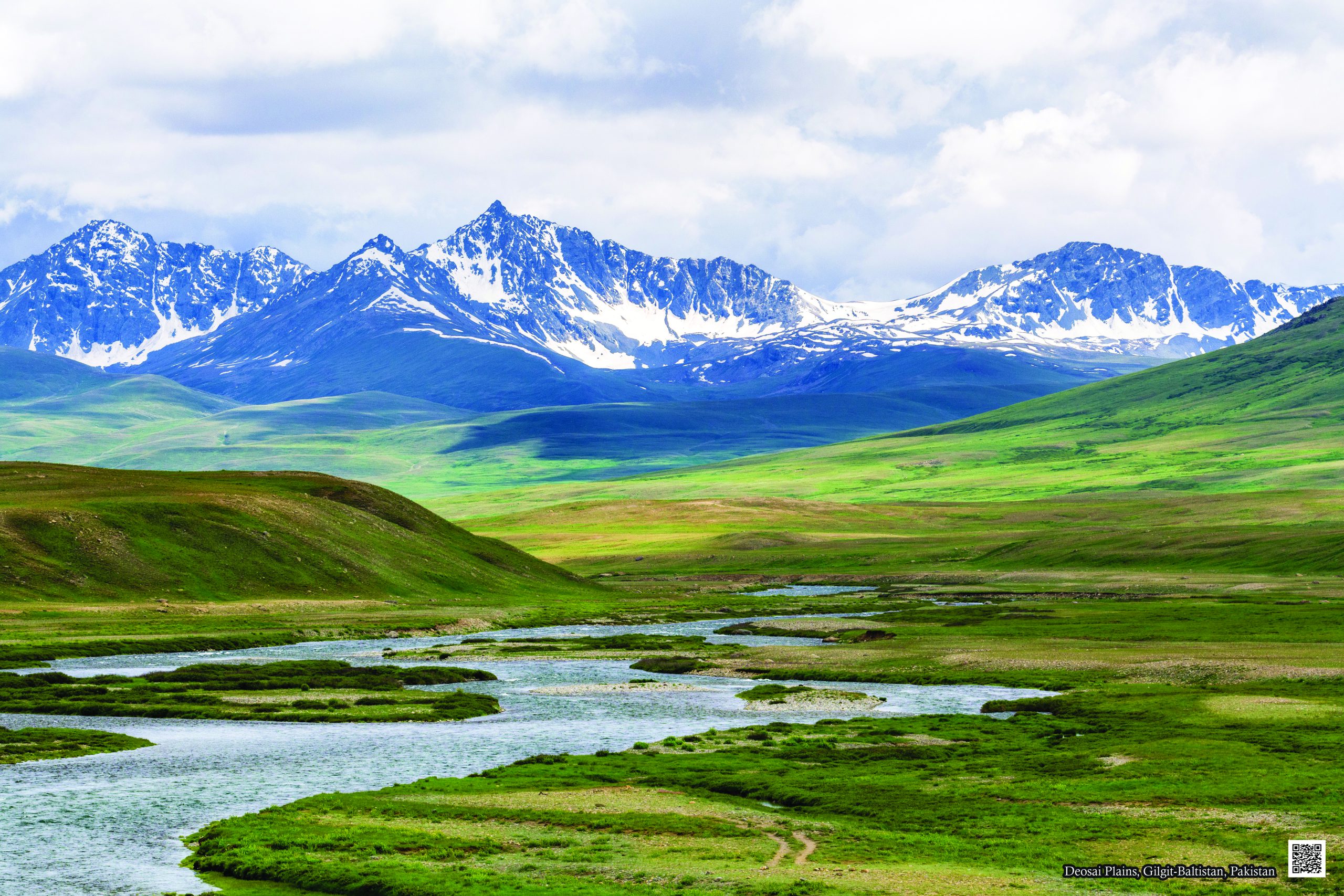
Back in Skardu that evening, I sat outside a small café watching the sunset burn the sky orange. I could still smell the cold air of the plateau on my jacket. My mind wandered back to the endless grasslands, the reflections in Sheosar Lake, the distant shape of the Himalayan brown bear, and the soft whistle of marmots in the wind.
Deosai had given me more than views; it had given me perspective. It taught me that the wild is not something separate from us—it is the truest part of us. Protecting it is not charity; it’s survival.
As the stars appeared one by one, I wrote in my notebook:
Deosai National Park, Pakistan—where giants walk under the stars, where silence speaks louder than words, and where every breath is a prayer to the earth.
Sustainable Tourism in Gilgit-Baltistan — A Call for Awareness
By the time I reached the lower valleys, I passed groups of tourists heading up—jeeps filled with families, bikers like me, photographers chasing the perfect shot. I smiled, hoping they would see more than a scenic destination. I hoped they would feel what I felt—that deep responsibility to protect what is still pure.
Sustainable tourism in Pakistan is not just an idea; it’s a necessity. Every traveler who visits Deosai National Park carries a duty—to leave no trace, to respect wildlife, to listen to the silence rather than fill it with noise.
If each visitor understood that this land is alive, that it breathes and remembers, then perhaps the next generation would inherit more than stories—they would inherit the real thing.
The Descent to Skardu — Reflections from the Roof of Pakistan
The journey back toward Skardu was slow, not because of the terrain but because I didn’t want it to end. The view from the top of the pass was breathtaking. From there, Deosai National Park, Pakistan, looked like an ocean of green and gold framed by snowy giants.
Halfway down, I stopped near an abandoned shepherd’s hut. Grass had grown through the stones, reclaiming it. It felt symbolic—the earth always takes back what we forget to care for.
I thought about everything I had seen: the herders, the rangers, the bears, the fragile balance that keeps this land alive. It struck me that Deosai isn’t just a park; it’s a mirror of ourselves. How we treat it reflects who we are as people.


