
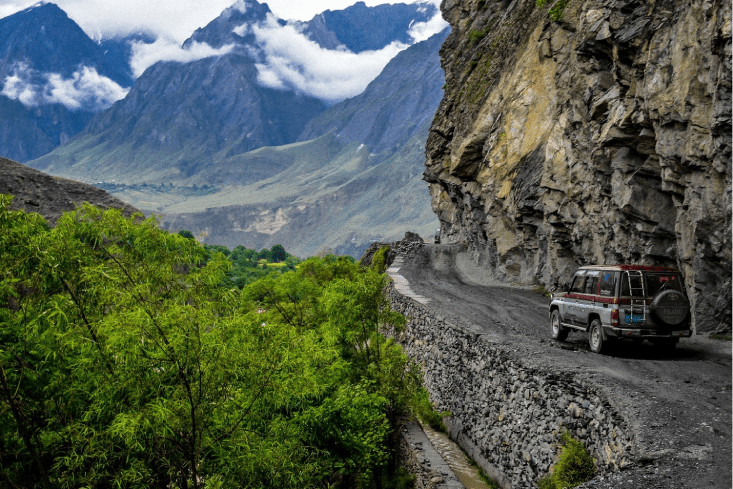
Some roads connect cities, and then some roads connect you to the soul of the earth. The journey from Gilgit to the Kalash Valleys is one of the latter—a raw, unforgettable ride through Pakistan’s giant mountains, where cliffs tower like ancient guardians and rivers roar with untamed power.
On this motorcycle adventure, the road is never easy. Landslides block the way, excavators carve paths out of rock, and the mountain decides how fast or how slow it goes. Yet with every turn, the landscape rewards you: frozen glaciers hiding in summer shadows, villages clinging to cliffs, and the warm smiles of locals who call this wild land home.
This is more than a motorcycle travel blog. It’s the story of a road that challenges, humbles, and inspires anyone who dares to cross the heart of the giant mountains of Pakistan.
The sun had barely risen when I stepped into the garden of my guesthouse in Gilgit. It was 7:30 a.m., and the valley still held onto the crisp air of the night. Birds hopped along the hedges, their morning songs weaving into the soft hum of the town waking up. I sat with a steaming cup of chai, finishing my breakfast while the mountains loomed quietly in the distance, their peaks bathed in golden light.
But peace never holds a traveler for long. My map was already marked: westward, toward the Kalash Valleys, deep in the mountains of northern Pakistan. On paper, it was “just” 400 kilometers. In reality, it was a test of patience, endurance, and humility before the road.
I strapped my bag, adjusted my helmet, and kicked Rani—Ftravelmy loyal motorbike—into life. The day had begun.
The First Stretch: Leaving Gilgit Behind
The road out of Gilgit was alive with its own rhythm. Trucks groaned under heavy loads, donkeys plodded along narrow paths, and people carried their day’s burdens with unhurried steps. I fell into the current of movement, and soon found myself behind a truck crammed with cows. Their large, calm eyes blinked at me as if amused by my urgency.
The driver leaned out of his window and waved.
“Where to, bhai?” he shouted over the roar of the engine.
“Chitral. The Kalash valleys,” I called back.
He laughed, a big, booming sound. “Then Allah help you. The road is not your friend today!”
I grinned, but inside, I knew his words carried truth.
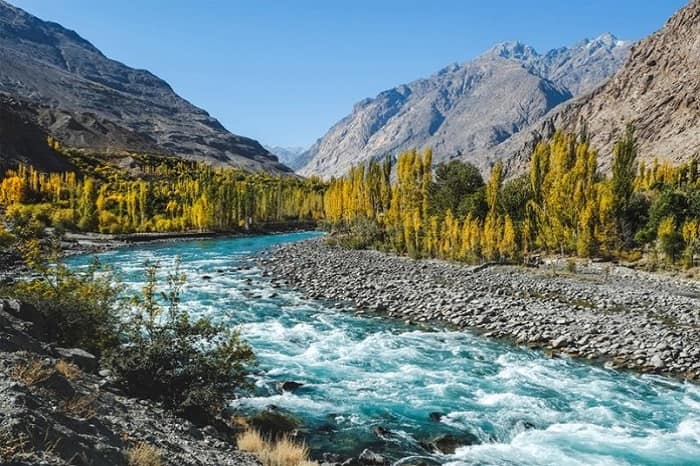
The valley stretched around me, breathtaking in its scale. The river beside the road foamed and crashed, wild and untamable. Every turn revealed a new view: cliffs sharp as knives, forests clinging stubbornly to steep slopes, and far above, snowy peaks catching the light. It was impossible not to stop every so often just to stare.
This wasn’t just a road trip. It was a constant duel—between me and the mountains, between the machine beneath me and the raw power of nature.
A Wall of Machines
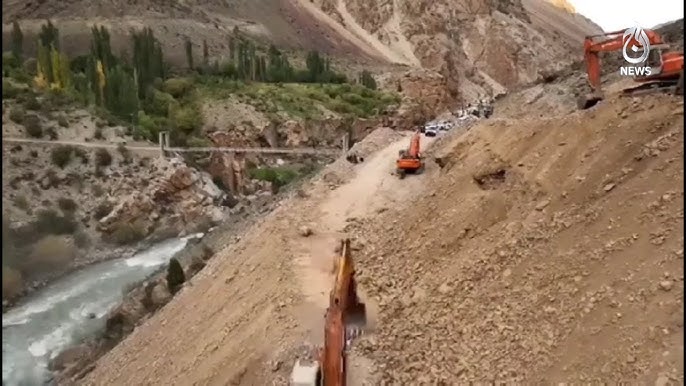
Not an hour into the ride, I met my first test. The road was blocked. Four excavators stood like giant beasts, clawing at the mountainside. Dust rose in thick clouds as they dug and hammered, sending rocks tumbling into the roaring river below.
I stopped with a line of other vehicles. A man in a shalwar kameez sat on a rock nearby, sipping tea from a dented flask.
“You’ll wait here a long time,” he said, smiling at me.
“How long?” I asked.
He shrugged. “One hour. Maybe two. Maybe more. These roads, they are alive. They break every day.”
He poured me a cup of his tea, the sweetness cutting through the dust in my throat. Around us, drivers stretched, chatted, and accepted the delay with the kind of patience only mountain people seem to master.
An hour and a half later, the machines finally pulled aside, and the line of vehicles lurched forward. My ambition of reaching Kalash in a day was already slipping, but there was no anger. In these mountains, you don’t argue with time. You surrender to it.
Villages in the Valley
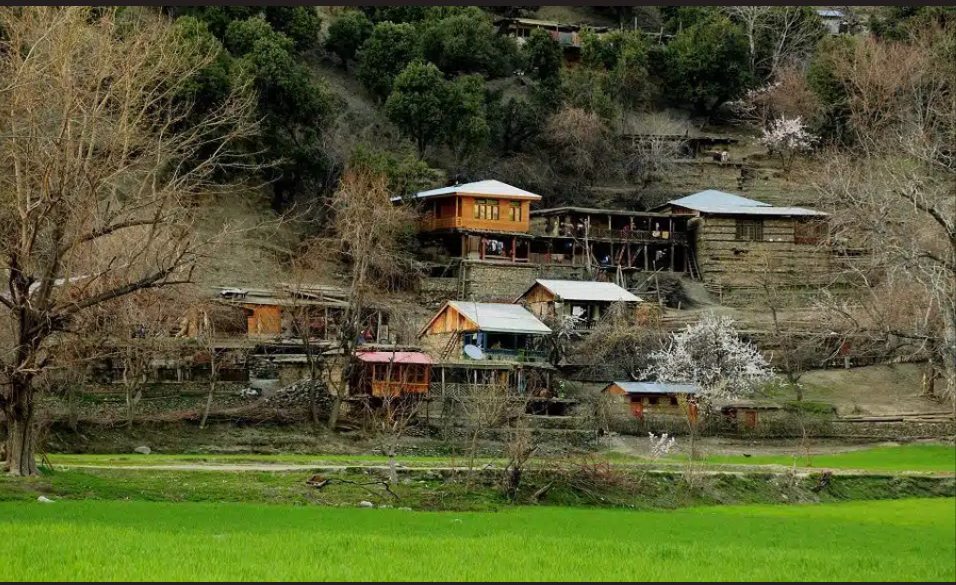
The road climbed gradually, always hugging the river. Villages dotted the valley like pearls on a string. Stone houses with wooden balconies leaned over the water, and fields of maize and apricot trees carved green patches into the otherwise harsh slopes.
Children ran to the road, waving furiously. “Hello! Hello!” they shouted, laughing as they chased me for a few steps. Their joy was contagious, and I found myself laughing inside my helmet.
In one village, I stopped to stretch. A boy of about ten approached, curious.
“Where are you going, uncle?” he asked.
“To Kalash,” I replied. “Do you know it?”
His eyes lit up. “Yes! They dance. They wear colorful clothes. But it is very far.”
I chuckled. “So I’ve heard.”
His honesty was refreshing, and his grin stayed with me long after I had left the village behind.
Ice in the Shadows
By midday, I was above 2100 meters. The air was thinner, though the sun still pressed hot against my shoulders. Around a bend, I pulled up short. A patch of ice lay frozen against the mountain’s north face. I dismounted, crouched, and touched it with my glove. Solid.
An old man carrying firewood stopped nearby, watching me.
“It never melts,” he said in Urdu. “The sun cannot reach here. Even in June, even in July, it remains.”
I looked back at the shimmering ice, shaking my head in wonder. “It feels like magic.”
The man smiled, his weathered face deep with lines. “In these mountains, everything is magic.”
He walked on, leaving me with his words echoing in my mind.
The Road Fights Back
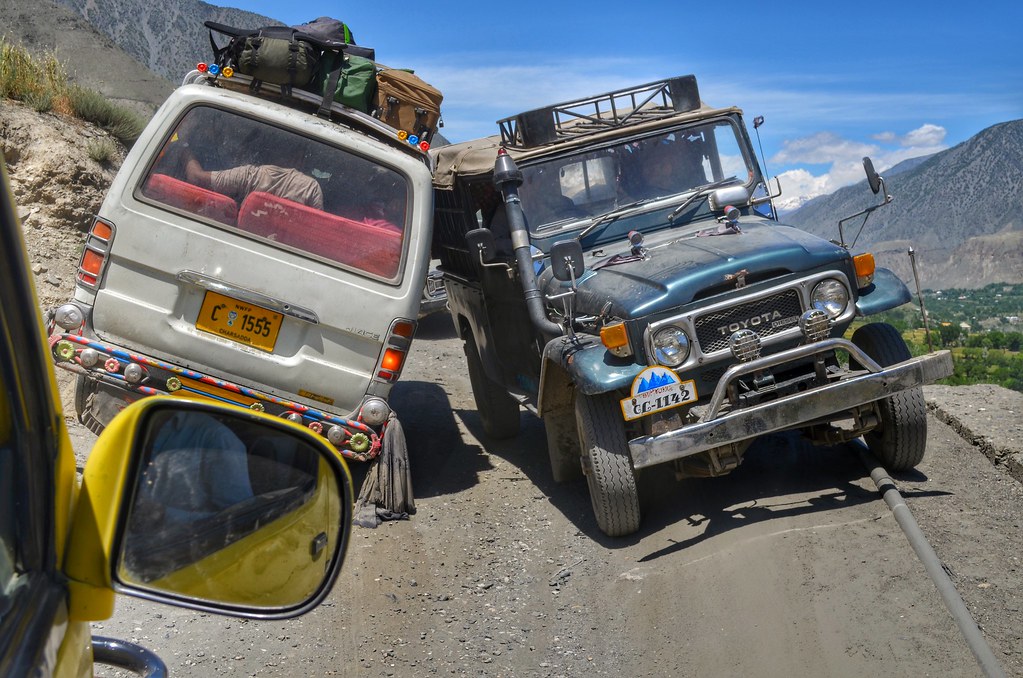
The road grew rougher as the hours passed. At one crossing, slabs of concrete had been laid across a rushing stream, and I had to edge Rani carefully over the makeshift bridge. At another, five excavators were at work, forcing yet another long wait.
I checked my watch: six hours of riding, and I had covered only 143 kilometers. Two hours had been lost to roadwork, but even without that, progress was painfully slow.
I began to feel it in my body. My arms ached from gripping the handlebars over rocks and ruts. My back protested every bump. Rani rattled and shook, but carried on with faithful determination.
Dust coated me from head to toe. My throat was dry, my patience thinner. And yet—every time I thought to complain, I looked up. The river thundered beside me, the cliffs glowed in shades of red and brown, and the sky spread endlessly above. Beauty and hardship walked hand in hand here.
Iron Mountains and Red Earth
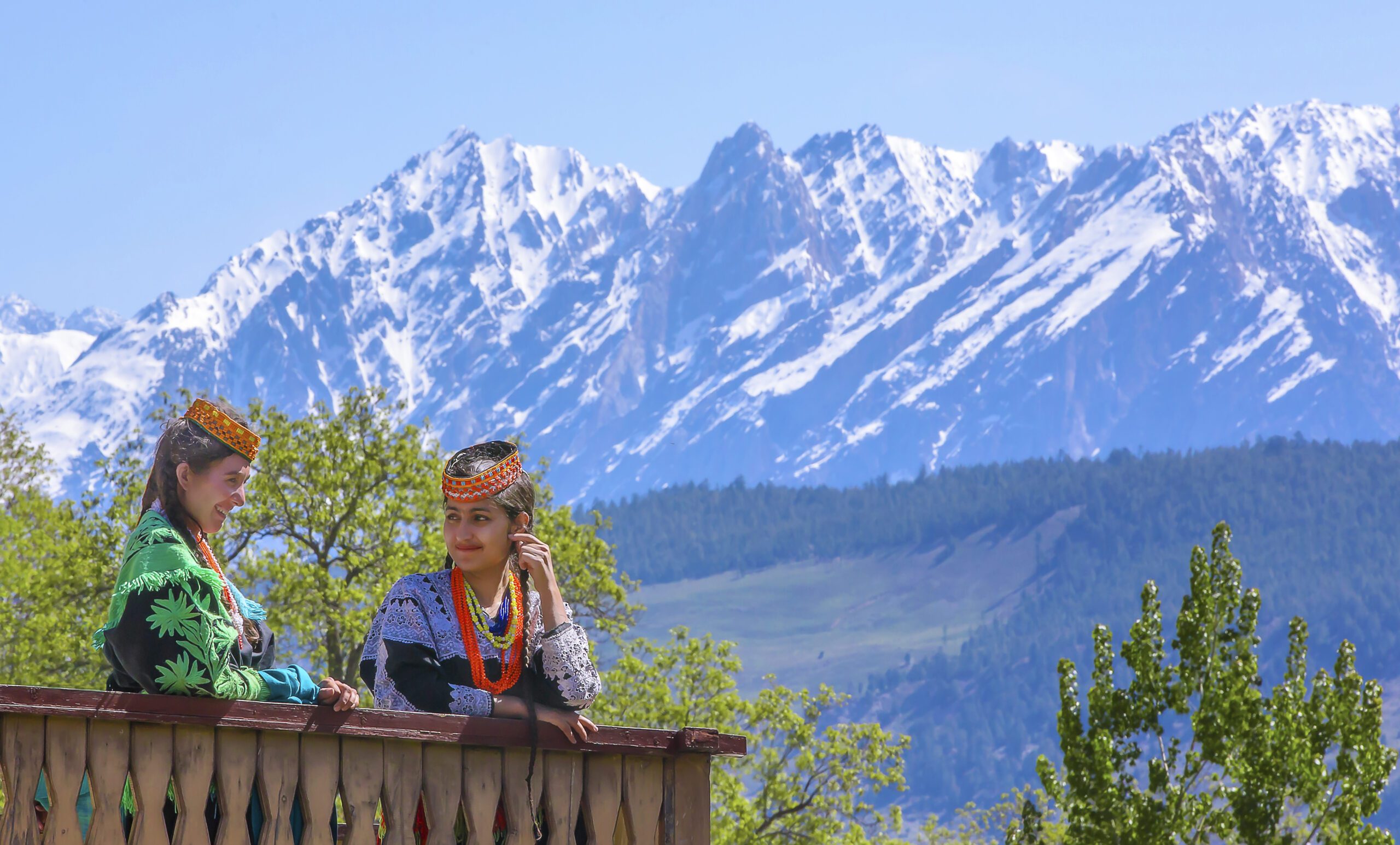
Higher still, the landscape shifted again. The soil turned rusty red, streaked with veins of iron. The cliffs looked otherworldly, like some giant had painted them in bold colors.
I stopped, mesmerized, and a passing shepherd paused beside me.
“They take iron from these mountains,” he said, gesturing with his stick. “But for us, they are just home.”
His sheep scattered along the slope, bells clinking. I nodded, taking in the sight. For me, it was a marvel. For him, it was simply life.
Storm on the Horizon
By late afternoon, the weather changed. Clouds gathered fast, swallowing the blue sky. A cool wind swept down the valley, carrying the smell of rain.
For a terrifying moment, I thought my rear tire had gone flat. The wobble beneath me felt wrong. I stopped, checked, and sighed with relief—it was fine. Just nerves, or maybe just the road playing tricks again.
As I climbed closer to the snow line, the temperature dipped. The mountains around me glistened with streaks of white, and the air carried a sharpness that hinted at the pass still waiting ahead.
Nightfall in the Village
By evening, I had accepted what I already knew: I would not reach the Kalash valleys that day. The road had stolen hours, the mountains had tested me, and my body demanded rest.
I pulled into a small roadside village. Dusty homes lined the slope, their windows glowing with firelight. Children gathered around as I dismounted, staring at the stranger on the bike.
A man approached, smiling warmly. “You came from Gilgit?”
“Yes,” I nodded. “I thought I would reach Kalash by tonight.”
He laughed, shaking his head. “No one reaches Kalash in one day. The road decides, not you.”
He ushered me inside his home, where his family offered bread, lentils, and steaming cups of chai. We sat together, the fire crackling, their hospitality wrapping around me like a blanket.
“The mountains are like this,” he said as we ate. “They are strong. They test everyone. But if you respect them, they will show you beauty.”
I looked around at their faces, at the warmth in their eyes, and thought: this is why we travel not just for the places, but for the people who give them meaning.
Reflection: The Road Writes Its Own Story
That day on the road from Gilgit to Kalash taught me more than any map or plan could. Travel in northern Pakistan isn’t about ticking off kilometers or racing to destinations. It’s about surrender. It’s about finding ice in the heat of summer, about waiting hours for excavators to carve a path, about dusty throats soothed by unexpected cups of tea.
It’s about the kindness of strangers in mountain villages, about the roar of rivers that humble you, about the realization that speed is an illusion in a land that moves to its own rhythm.
When I finally lay down to sleep that night, I knew tomorrow would bring more climbing, more challenges, and more wonder. The Kalash Valleys were still waiting. But tonight, under the shadow of the mountains, I was exactly where I was meant to be.
Because here, in the heart of Pakistan’s mountains, the road doesn’t just take you somewhere. The road writes your story.


